


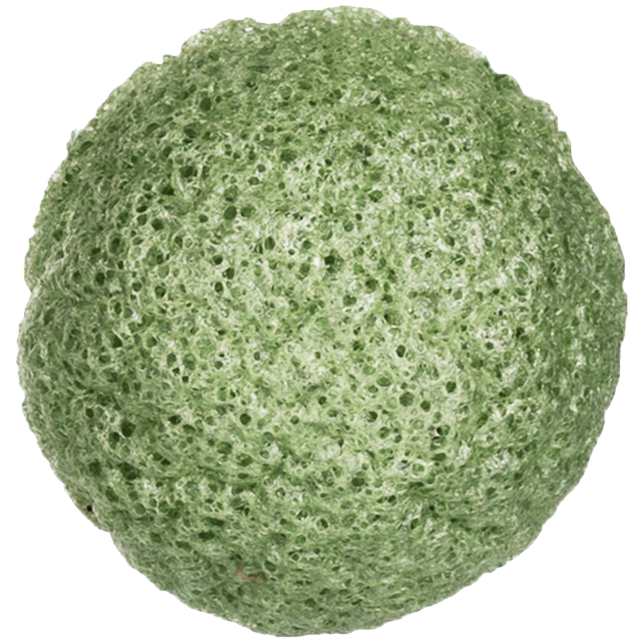
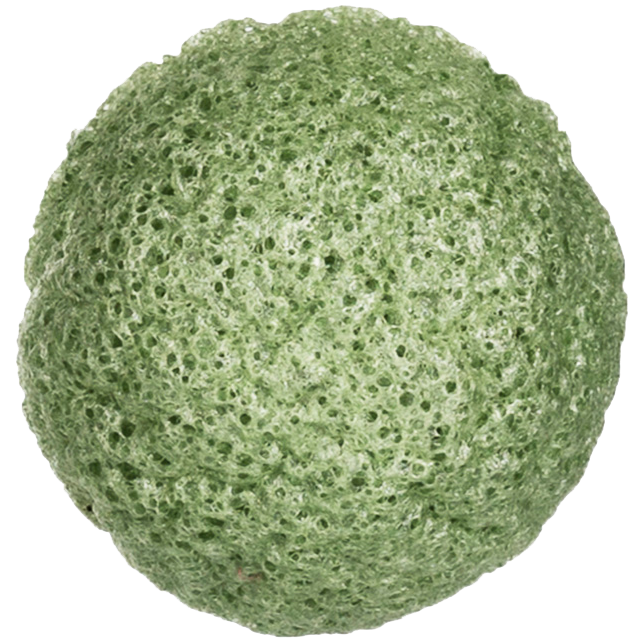
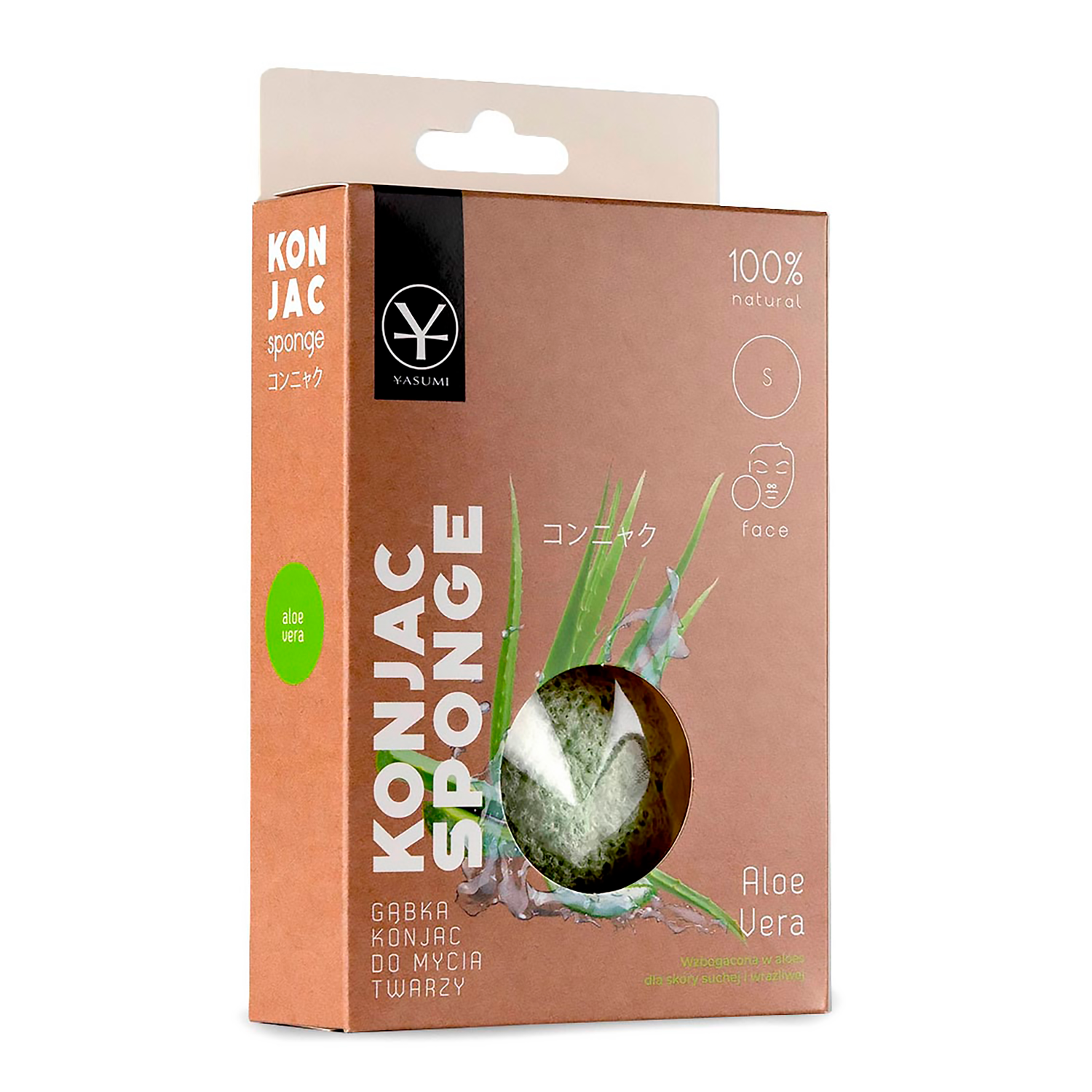
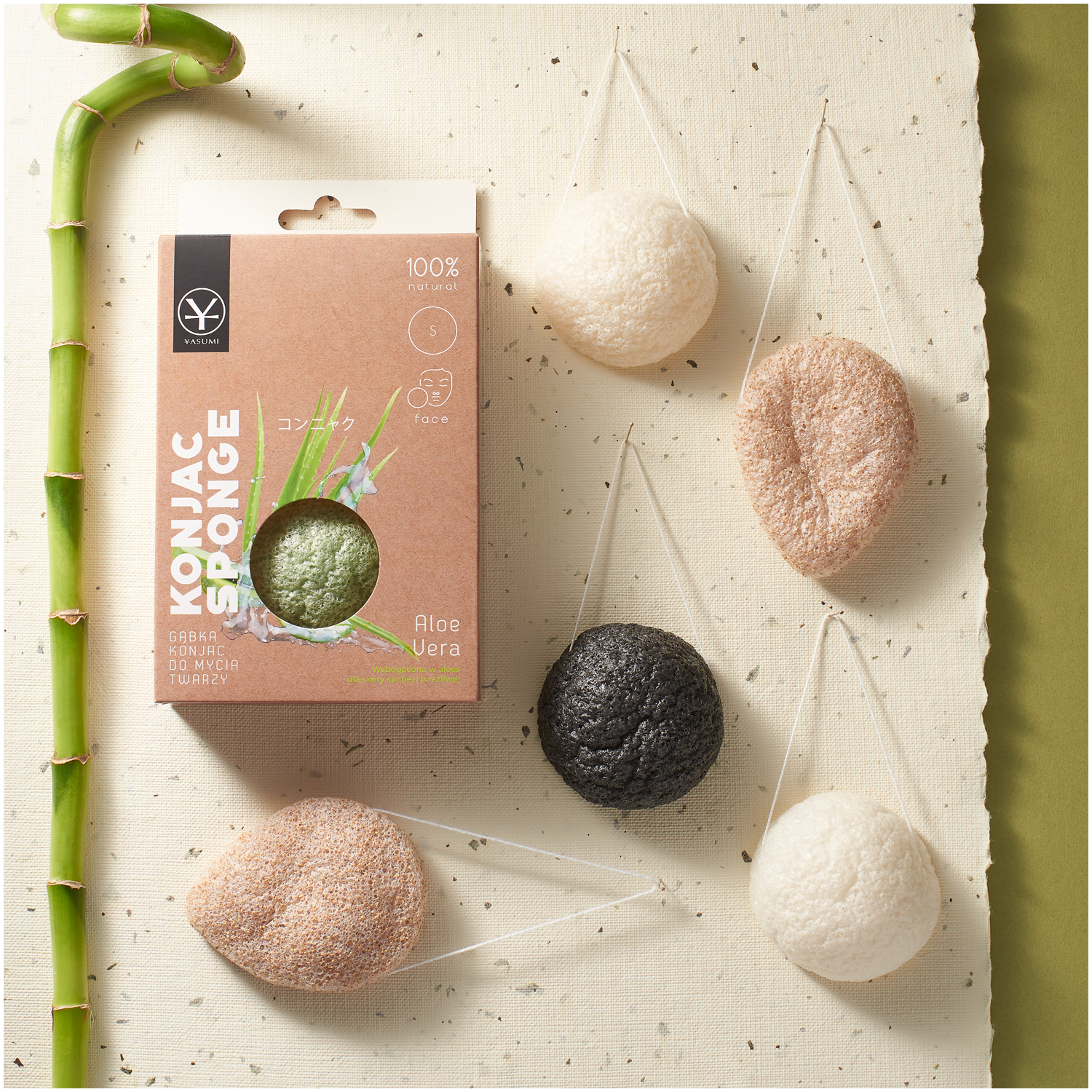



Small facial sponge, 1 pc.
Benefits: cleansing, moisturizing, soothing. Aloe helps moisturize and regenerate the skin – this plant effectively soothes inflammation and irritation. Additionally, it's worth noting that this plant is a humectant – a hygroscopic substance that not only attracts water molecules but also effectively stores them. How to use: Before use, soak the sponge in water until soft. It's recommended to massage in circular motions. To enjoy the sponge for as long as possible, squeeze out excess water after each use and hang it in a dry place. Do not store the sponge inside a shower, as a humid environment shortens the sponge's lifespan. If left unused for a long time, a sponge hardens, which is a natural phenomenon. History: Konjac Sponge - Konjac is the root of a plant known and valued in Japan for over 1,500 years for its nutritional and health-promoting properties. It was used in Japanese medicine as early as the 6th century AD. Konjac fibers possess natural moisturizing properties and a mild alkaline reaction, which contributes to their cleansing properties. The sponge restores the skin's optimal pH level and easily removes impurities and excess sebum. The unique, web-like structure of the Konjac fibers allows the sponge to gently and pleasantly massage the skin while cleansing, stimulating blood circulation and regeneration. It naturally leaves the skin fresh and clean. Description: The unique structure of the sponge provides a pleasant massage of the targeted area, stimulates blood flow, and gently exfoliates. Thanks to its natural moisturizing factor, it soothes irritations, moisturizes, and restores comfort to dry skin. Yam provides the skin with essential amino acids, vitamins, and minerals. It brightens and prevents minor discolorations and spots. It has antibacterial and antioxidant properties. The sponge's alkaline pH restores the skin's natural pH. After use, the skin is gently exfoliated, moisturized, and smoothed. It contains no chemical additives, preservatives, or dyes. 100% biodegradable.
Comment