


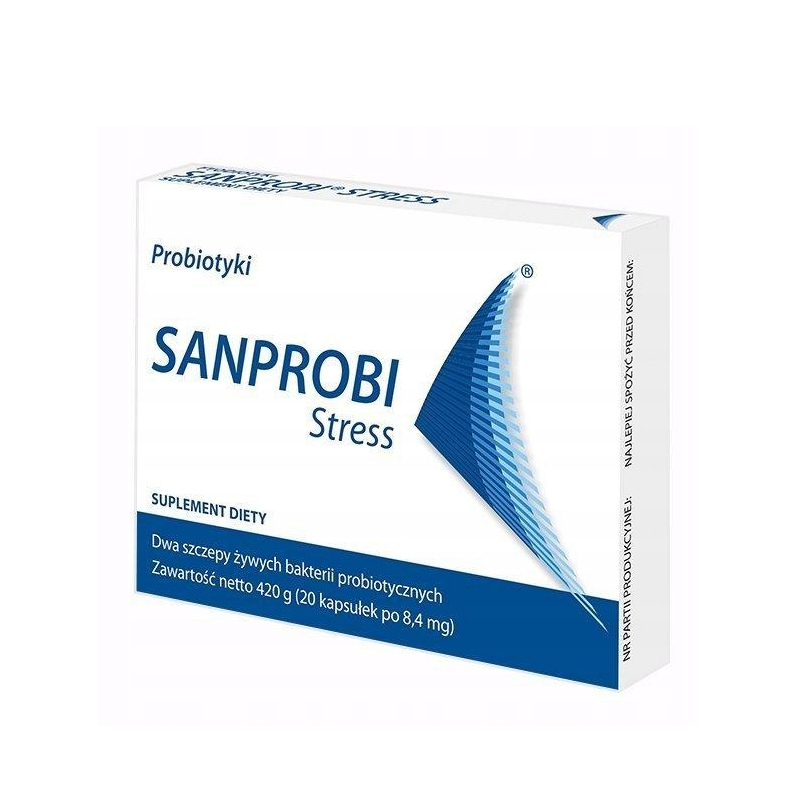
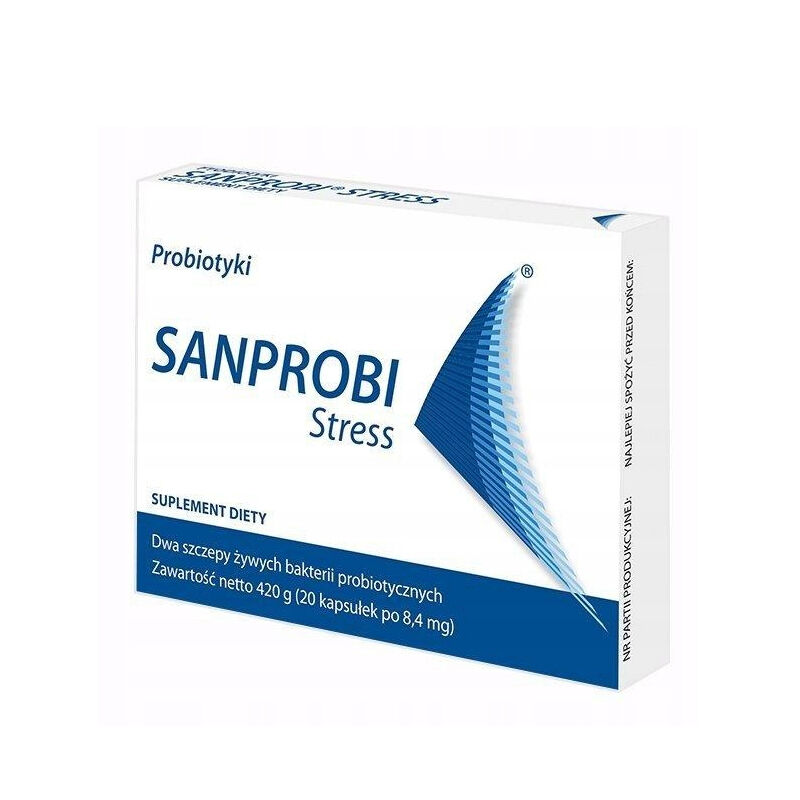

dietary supplement, 20 capsules/1 pack.
SANPROBI® Stress (20 capsules) SANPROBI® Stress (20 capsules) is a modern dietary supplement that meets the needs of people looking for a high-quality probiotic. It contains two strains of probiotic bacteria, Lactobacillus helveticus Rosell® – 52 (formerly Lactobacillus acidophilus Rosell® – 52) and Bifidobacterium longum Rosell® – 175. This product is a safe choice for adults and children over 3 years of age. It is available in a practical capsule form and provides 20 daily servings. Discover the benefits of supplementing with Sanprobi. SANPROBI® Stress (20 capsules) is a dietary supplement that will meet the expectations of even the most demanding consumers. It contains carefully selected ingredients, including two strains of probiotic bacteria, which – according to the manufacturer – can be taken while taking antibiotics. Importantly, it can be used not only by adults but also by children over three years of age. It is worth noting that it has received a positive opinion from the Children's Memorial Health Institute (No. 127/OP) and the Quality Institute of the Jagiellonian Center of Innovation. The preparation can be used in two ways: by swallowing the capsule or by opening it and dissolving its contents in liquid. Properties of the individual ingredients of the supplement: Probiotic bacteria are live microorganisms naturally occurring in the human body. Among the most studied are strains of the genera Lactobacillus and Bifidobacterium. To be considered a probiotic, a strain must meet several standards, including the ability to adhere to epithelial cells and be resistant to bile acids and gastric juice. When it comes to natural sources of probiotics, the most valuable are kefir, buttermilk, and fermented vegetables. Production Process and Product Quality: Sanprobi dietary supplements, including SANPROBI® Stress (20 capsules), are manufactured in a modern production facility fully equipped to package probiotic products. Importantly, it operates in accordance with the necessary safety and quality standards, including HACCP and GMP. It is designed to minimize the exposure of products to adverse external factors, such as moisture and high temperatures. To achieve this goal, an innovative ventilation and air conditioning system was installed and HEPA 13 filters were used, which maintain air purity at the same level as in Class D pharmaceutical plants. The company also boasts its own Research and Development Laboratory, staffed by specialists in biotechnology and microbiology. What makes Sanprobi unique? Sanprobi is one of the most recognizable brands specializing in the production of probiotic products in Poland, offering dietary supplements tailored to various consumer needs. In addition to SANPROBI® Stress (20 capsules), its product range includes products such as SANPROBI® IBS, SANPROBI® Active & Sport, and SANPROBI® Osteo. What distinguishes this company from many other manufacturers is its commitment to research. It collaborates with Polish and foreign universities and conducts various projects related to microorganisms. It's worth noting that over the past few years, the company has been recognized by various business institutions and has won numerous awards and distinctions. The highest safety standards in Sanprobi products. The Sanprobi brand places great importance on safety. Its facility is divided into several different zones – one of them is the so-called clean zone, which is accessible only to employees with current sanitary and epidemiological certificates and the director's consent. It includes, among other things, a cleaning product warehouse, a communication corridor, a car wash, an encapsulation and blistering room, and a material and personnel lock. It's also worth noting that Sanprobi dietary supplements are made from carefully selected ingredients and based on scientific data. The company strives for full transparency, which is why it collaborates with independent research units and analytical laboratories. Some of its preparations have received positive reviews from the Children's Health Center, the National Medicines Institute, and the Quality Institute of the Jagiellonian Center for Innovation.
Comment