


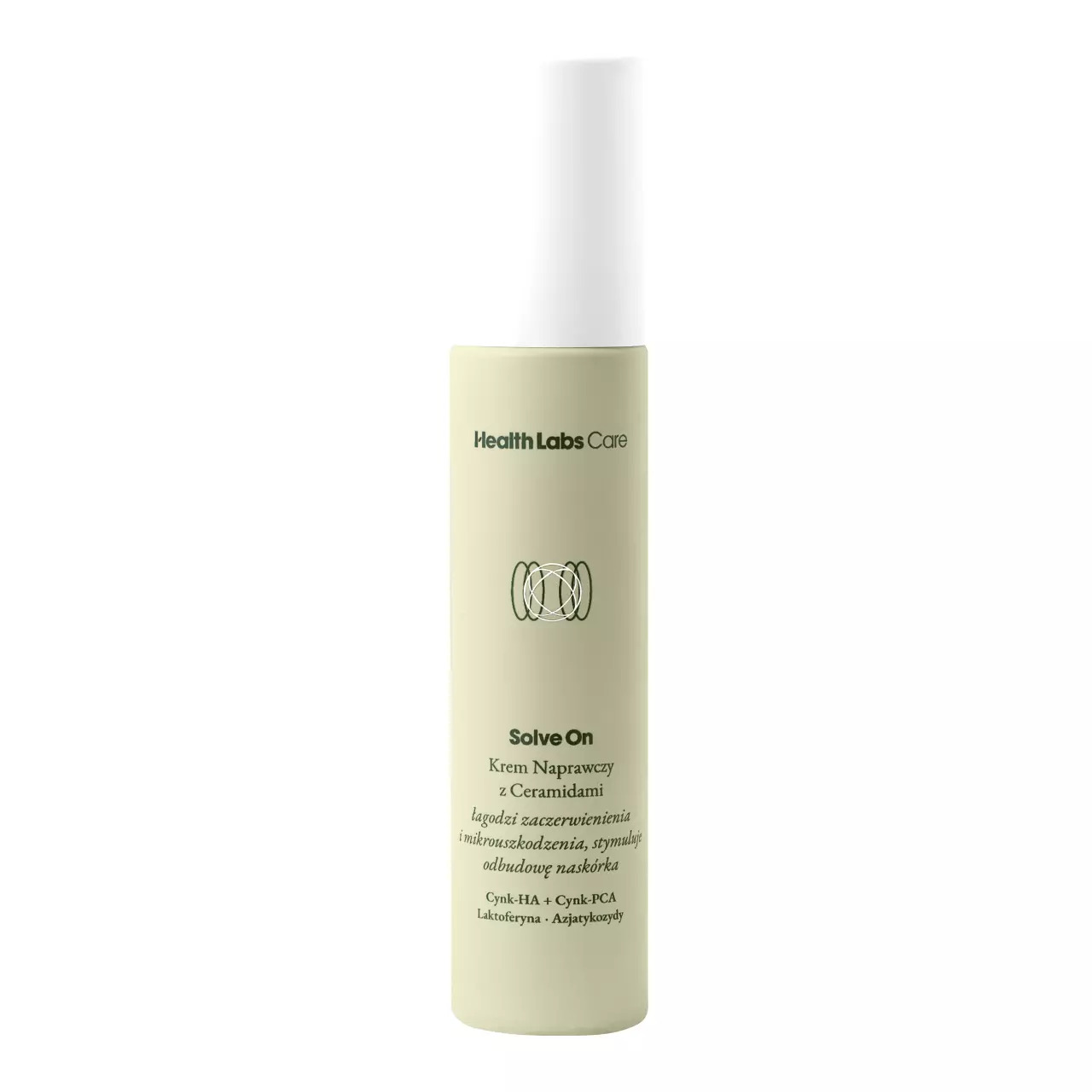

Repairing face cream with ceramides, 50 ml
Solve On Repairing Cream with Ceramides• stimulates epidermal regeneration thanks to the innovative combination of zinc with hyaluronic acid (zinc-HA) and pyroglutamic acid (zinc-PCA)• moisturizes, soothes irritations and reduces skin discomfort• light, non-comedogenic consistency does not burden the skin and works well under makeup• the Lactobacillus ferment contained in it rebuilds damaged skin microbiota• reduces imperfections of acne-prone skin, as confirmed by 70% of surveyed women*
What distinguishes the Repairing Cream with Ceramides?
• Innovative combination of zinc with acidsZinc combined with hyaluronic acid (zinc-HA) and pyroglutamic acid (zinc-PCA) supports the repair processes in damaged epidermis and regulates sebum secretion.
• Regenerating effect of ceramidesThe ceramides (NP, AP, EOP) contained in the cream, combined with plant emollients, support the regeneration of the epidermal barrier and replenish the deficits in the intercellular cement, thanks to which the product reduces dryness and redness of the skin.
• Soothing asiaticosides and lactoferrinThe repair cream with ceramides contains isolated asiaticosides, which reduce the oxidative stress of skin cells and reduce its reactivity, as well as lactoferrin, which accelerates the healing process of the epidermis and soothes irritations and redness.
• Proprietary recipeThe formula of the Repair Cream with Ceramides was created in collaboration with chemists, biotechnologists, chemical technologists with many years of experience in the cosmetics industry, and cosmetologists specializing in the treatment of problematic skin.
Choose when your skin needs• reducing the visibility of acne lesions• limiting inflammation• moisturizing and soothing irritation• regenerating the lipid barrier• restoring the proper moisture level• supporting the balance of the skin's microbiota
Get to know the ingredients of your cream
CeramidesCeramides are a group of organic chemical compounds classified as sphingolipids, which are a key part of the binder filling the spaces between the cells of the stratum corneum of the epidermis. Ceramide deficiencies in the epidermis result in increased permeability of the epidermal barrier, which leads to increased transepidermal water loss and decreased epidermal hydration, while a dysfunctional lipid barrier increases the risk of skin irritation.
Zinc hyaluronate (zinc-HA) and zinc pyroglutamate (zinc-PCA)The combination of zinc with hyaluronic acid (zinc-HA) and pyroglutamic acid (zinc-PCA) is used in the treatment of problematic skin due to its antibacterial, skin-soothing, and sebum-regulating effects. Zinc-PCA additionally reduces the conversion of testosterone to dihydrotestosterone, which has three times greater affinity for androgen receptors in the skin than testosterone. Both androgens stimulate sebum production and enhance keratinization. Zinc hyaluronate, in turn, combines the sebum-regulating properties of zinc with the moisturizing properties of hyaluronic acid.
LactoferrinA protein naturally produced by our body, essential in immune-building processes. It is present in many body fluids and glandular secretions, such as milk, saliva, tears, and nasal secretions. It stimulates the differentiation of keratinocytes, healing wounds, and skin lesions. It acts as a protein capable of binding to iron ions, making iron more readily absorbed by the body.
Centella Asiatica ExtractCentella Asiatica (also known as Gotu kola) is a plant from the Apiacae family. It is a traditional plant used for medicinal and cosmetic purposes for thousands of years. It has an exceptionally wide range of applications, primarily due to the presence of pentacyclic triterpene saponins (Asiaticoside, Madecassoside) and tannins, which have antioxidant and anti-inflammatory properties. Gotu kola is still used today to treat wounds, burns, and scars. In cosmetic products, it has been used to protect the skin from oxidative stress, stimulate epidermal renewal processes, and soothe irritation.
Linoleic and linolenic acidThese ingredients regenerate the epidermal barrier and have anti-inflammatory properties. They reduce skin irritation and increase epidermal hydration.
Hyaluronic acidIntensively moisturizes and reduces transepidermal water loss. It increases skin hydration, supports regeneration, and also has anti-aging properties. Depending on its molecular weight, HA has different properties: smaller molecules penetrate the epidermal barrier more easily, providing hydration in the upper layers of the epidermis. High-molecular-weight hyaluronic acid does not penetrate the epidermis, but binds water molecules from the environment, creating a moist compress on its surface that reduces tightness and dryness.
PanthenolA substance that soothes skin irritations and accelerates the regeneration process. It reduces skin dryness.
TrehaloseTrehalose is known primarily for its ability to protect proteins and other biomolecules from stressful conditions: very high and very low temperatures, dehydration, and osmotic stress. It increases the level of epidermal hydration. It has photoprotective properties.
Pear Juice Ferment FiltrateThe addition of Lactobacillus ferment (Lactobacillus/Pear Juice Ferment Filtrate) supports the skin's microbiota and helps restore its balance, which has a positive effect on the condition of problematic skin. People with problematic skin often struggle with dysbiosis (imbalance of the skin's microbiota). The predominance of certain (IA1) strains of C. acnes bacteria with greater pathogenicity makes these people more susceptible to acne breakouts. Lactobacillus Ferment. Rapeseed and wheat ferment is a postbiotic that supports the balance of the skin's microbiota, which translates into an improved condition of the epidermal barrier.
UsageThe product can be used daily, day and/or night. Adjust the frequency of use to the condition and needs of the skin. If it gets into eyes, rinse with water. If irritation occurs, discontinue use.
Comment