


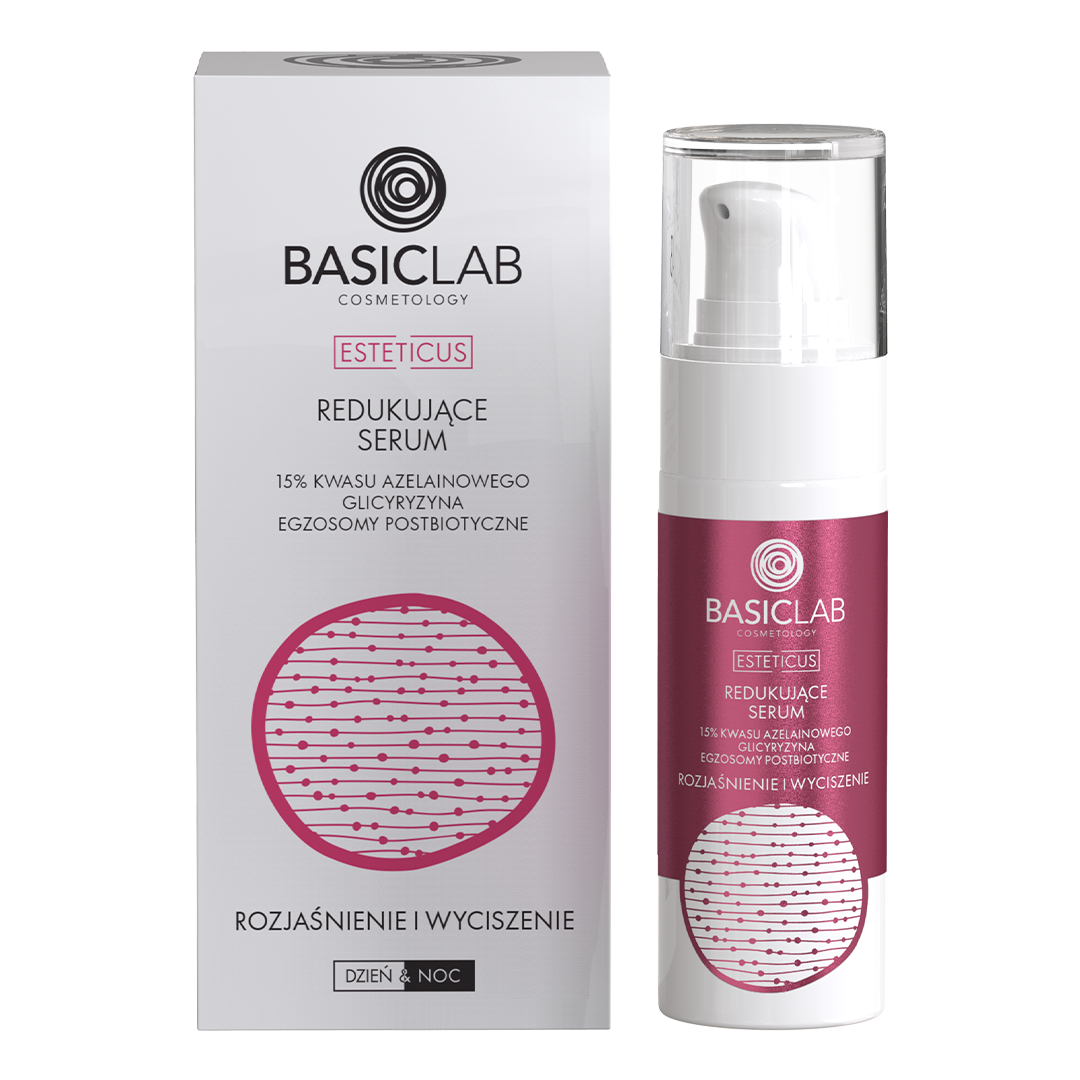
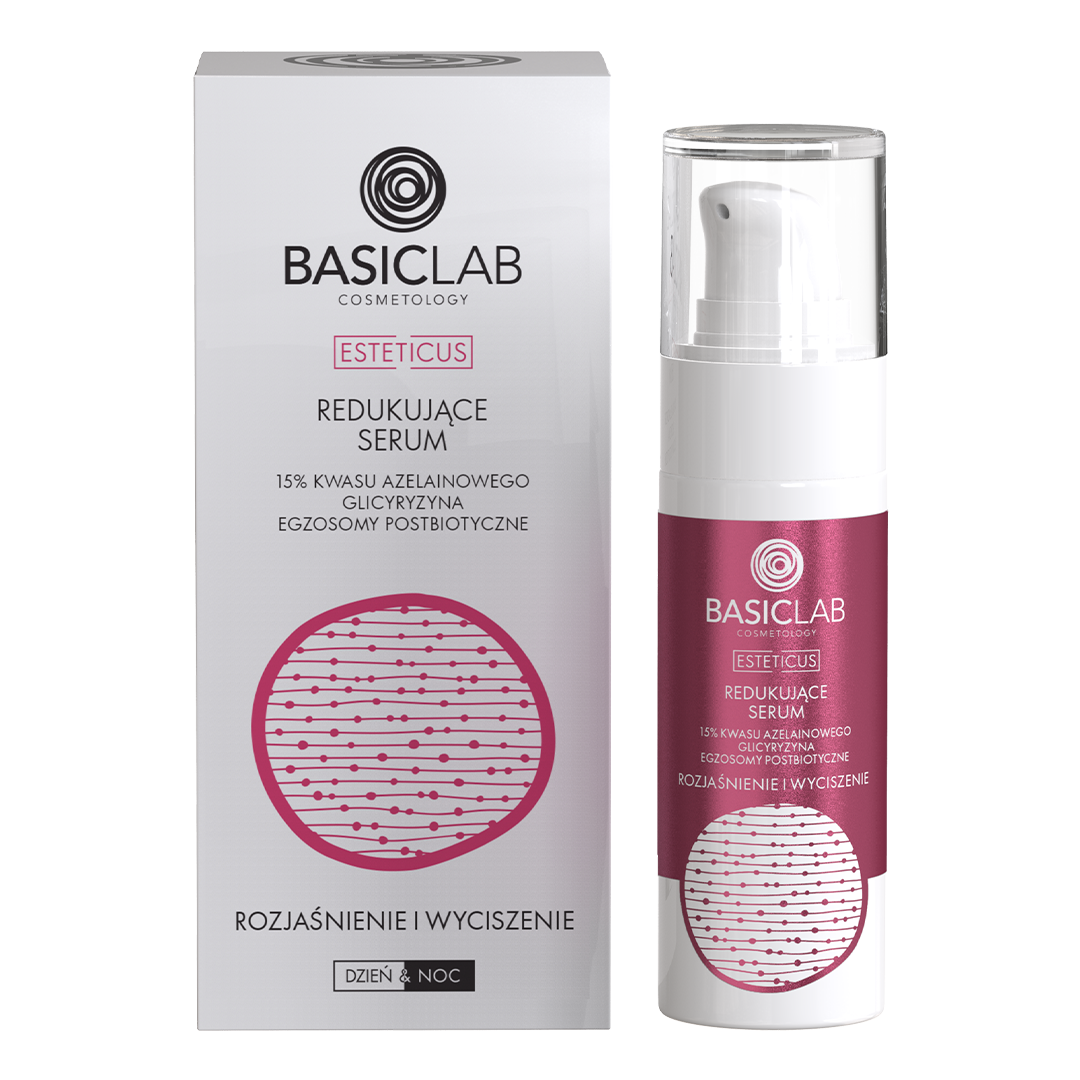


Reducing Face Serum 15% Azelaic Acid, Glycyrrhizin, Postbiotic Exosomes, 30 ml
Reducing serum with 15% azelaic acid effectively cares for acne-prone skin, including rosacea, soothing redness and imperfections. This dermocosmetic brightens discolorations and prevents the formation of new ones, restoring a uniform and even skin tone. It reduces the tendency for new imperfections to form, which visibly improves skin texture. The soothing ingredients contained strengthen the protective barrier of the epidermis and improve its elasticity, reducing the appearance of wrinkles. ACTION: 15% azelaic acid effectively soothes micro-inflammation and brightens the skin, evening out its tone. It minimizes bacterial growth and regulates sebum production, making it an ideal solution for acne-prone skin. It exhibits keratolytic properties, helping exfoliate dead skin cells, thus preventing imperfections. Glycyrrhizin, in the form of a salt of glycyrrhizic acid, is known for its soothing and calming properties and helps reduce irritation and redness. It acts as an antioxidant, protecting the skin from the harmful effects of free radicals. Gallic acid diglucoside, bioactivated by the skin's microbiome, is highly effective in reducing discoloration. It effectively brightens pigmentation, reduces microinflammation, and contributes to a more even complexion. Postbiotic exosomes are an innovative ingredient characterized by their microscopic size, ensuring excellent absorption and penetration into the deeper layers of the epidermis. It improves elasticity, reduces the appearance of wrinkles, and brightens skin tone. Strengthens the skin's protective barrier, improving its resistance to external factors. RESULTS: brightened and even skin tone, visible improvement in skin texture, reduced micro-inflammation and reduced skin reactivity, reduced redness, support in the regeneration of the hydrolipid barrier, reduced excessive sebum production, improved skin elasticity and firmness. SUITABLE FOR SKIN prone to acne, including rosacea, prone to micro-inflammatory lesions, sensitive and over-reactive, vascular, with visible telangiectasia, with imperfections, roughness, and uneven texture.
Comment