


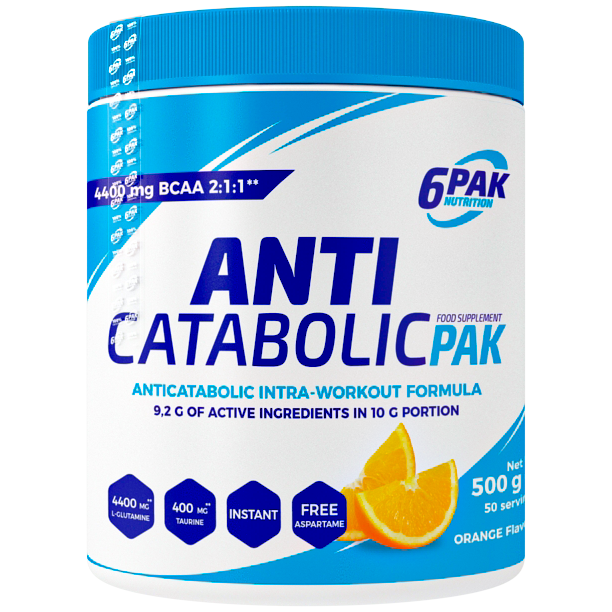
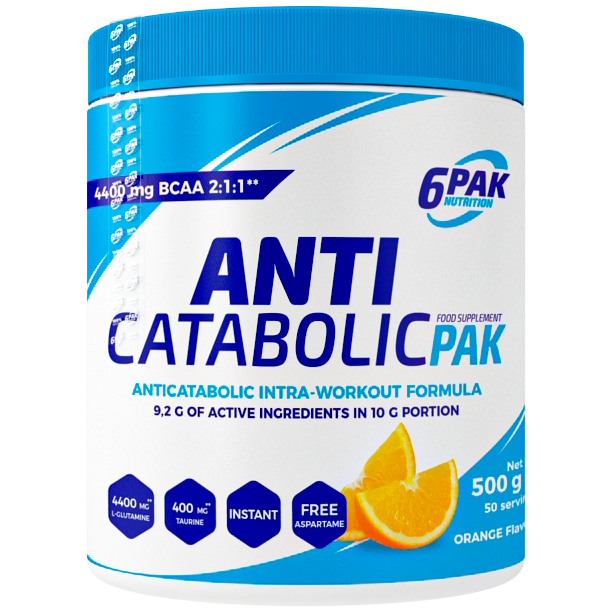

Orange-flavored dietary supplement, 500 g
Anticatabolic PAK is an advanced product based on high-quality BCAA amino acids (in a 2:1:1 ratio), vitamins, taurine, and L-glutamine. L-leucine, L-isoleucine, and L-valine are branched-chain amino acids (BCAAs). They belong to the group of essential (exogenous) amino acids, which we must obtain from food (or supplementation) because our body cannot synthesize them on its own. BCAAs constitute approximately 14-18% of all amino acids in muscle tissue. During physical activity, there is a risk of increased leucine, isoleucine, and valine depletion, so to mitigate this effect, it is worth supplementing them with a dietary supplement. Vitamin C positively affects the body's resistance to all types of infections. It has strong antioxidant properties that help reduce free radical activity. It's worth noting that increased amounts of this vitamin accelerate the synthesis of new collagen proteins necessary for rapid joint regeneration. Vitamin C is widely known for its ability to normalize cortisol levels, which are known as the stress hormone and can lead to tissue breakdown (if high levels persist for prolonged periods). Vitamin B6 contributes to normal protein and glycogen metabolism, as well as energy metabolism. It also supports the proper functioning of the nervous system and participates in hematopoietic processes, making it crucial for every human body. Thanks to taurine's action on the same receptors as insulin, it improves the transport of nutrients (including amino acids and creatine). L-glutamine is a necessary precursor in the synthesis of protein and other amino acids such as ornithine, arginine, citrulline, and proline. It is also essential for glucose formation, and its metabolism is an important source of energy for many cells in the body. It also has anti-catabolic properties, which are often underestimated by beginner athletes. It supports muscle recovery, shortening the time it takes to regain full strength. It is an endogenous amino acid that plays a crucial role in nitrogen metabolism, thus influencing the rate of new protein synthesis. It helps reduce the formation of lactic acid, which directly impacts the speed of post-exercise recovery.
Comment